
Building a Strong CPD Provider Profile
A practical guide to presenting your organisation clearly during the CPD provider approval process.
Read article ↗Practical content for providers building professional learning activities and managing accreditation quality.
A practical guide to presenting your organisation clearly during the CPD provider approval process.
Read article ↗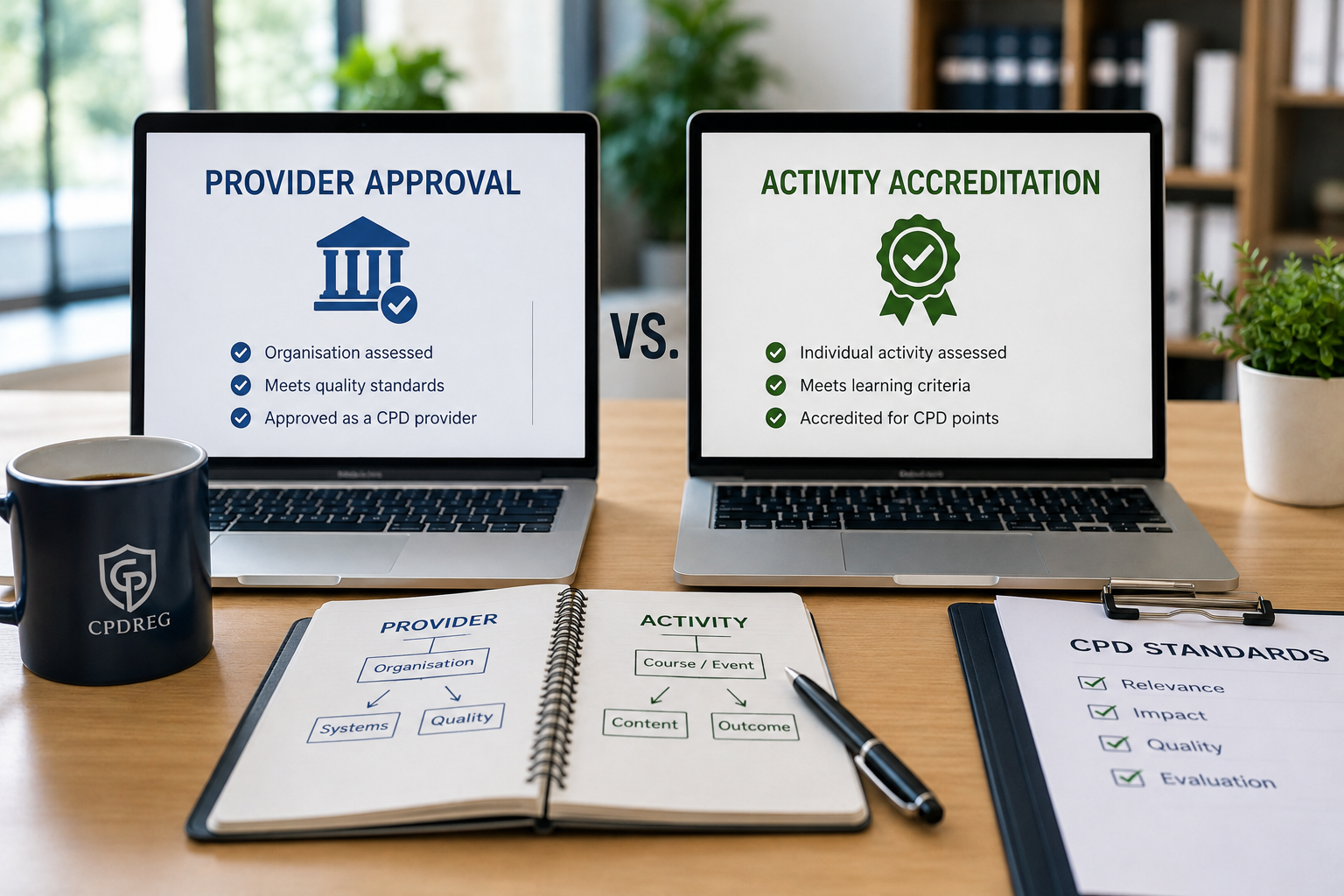
Why organisation-level quality assurance and individual activity review should be treated as separate stages.
Read article ↗
A practical overview of the evidence reviewers expect to see in a structured CPD submission.
Read article ↗
Simple principles for writing outcomes that reviewers and participants can understand.
Read article ↗Learn what supporting evidence can strengthen a professional CPD activity application.
Read article ↗Good CPD learning objectives explain exactly what participants should know or be able to do.
Read article ↗Assessment methods should reflect the type of CPD activity and the intended learning outcomes.
Read article ↗Provider approval and activity accreditation are connected but they review different aspects of CPD quality.
Read article ↗Trainer qualifications and professional experience are an important part of CPD quality assurance.
Read article ↗A clear programme schedule helps reviewers understand how learning time is structured.
Read article ↗Accessibility planning helps ensure that professional learning is available to participants with additional needs.
Read article ↗CPD hours should represent genuine educational activity rather than the total duration of an event.
Read article ↗Participant feedback can provide valuable evidence for continuous improvement of professional learning.
Read article ↗An effective quality assurance process helps maintain consistency across multiple CPD activities.
Read article ↗References strengthen CPD content when they are relevant, reliable and appropriately used.
Read article ↗Advanced professional audiences require learning that reflects their existing knowledge and experience.
Read article ↗Online and hybrid CPD can meet professional learning standards when the educational structure is clearly designed.
Read article ↗A clear complaints process supports transparency and professional accountability.
Read article ↗A strong activity description helps reviewers and participants understand the purpose of the learning.
Read article ↗CPD organisations often process participant, trainer and professional registration information.
Read article ↗Public verification helps employers and professionals confirm the status of accredited learning.
Read article ↗Professional registration can provide useful supporting information when evaluating trainer suitability.
Read article ↗Workshops benefit from a balance of teaching, demonstration, supervised practice and reflection.
Read article ↗Conference accreditation requires a clear distinction between educational sessions and non-learning programme elements.
Read article ↗Accredited activities should remain consistent with the programme and evidence that was originally reviewed.
Read article ↗CPD evaluation can explore learning outcomes as well as participant satisfaction.
Read article ↗Organised trainer evidence helps providers demonstrate faculty competence efficiently.
Read article ↗CPD activities should promote responsible professional practice and avoid misleading educational claims.
Read article ↗A well-organised submission allows reviewers to focus on educational quality rather than missing information.
Read article ↗Accreditation validity periods help distinguish current approved activities from historical records.
Read article ↗Providers should consider copyright ownership and permissions when using learning resources.
Read article ↗Clearly defining the target audience improves the relevance and educational level of a CPD activity.
Read article ↗Professional relevance connects learning content with real responsibilities and practice.
Read article ↗